
AFL Fantasy editorial desk

Sharper AFL Fantasy decisions, round after round

Ruck & Roster helps AFL Fantasy Classic coaches weigh roster-structure decisions: identify the squad constraint, compare the available roles and choose an approach that fits the roster.

Practical guidance on captaincy, squad structure, fixtures and transfers — without noise or false certainty.

Read the board
Notebook, oval markings and two unlabelled magnetic player markers arranged for a captain and vice-captain comparison on a warm Australian desk
Start with the choice in front of you.

Captaincy board

Compare the role before choosing a captain

Captaincy is easier to explain when the alternatives sit side by side. Start with the role, read the relevant fixture, then weigh ceiling against reliability.

This is a timeless illustration, not advice for the current round.

Editorial captaincy board with neutral high-ceiling midfielder and reliable scoring midfielder role cards, captain and vice-captain markers, and a blank fixture note
  1. 1

    Name the two options

    Place a captain option beside a vice-captain option. A high-ceiling midfielder may offer a different outcome from a reliable scoring midfielder, so make that distinction clear in the comparison.

  2. 2

    Read role and fixture together

    Ask what each midfielder is expected to contribute through their role and how the relevant fixture changes the picture. Keep the matchup alongside the player profile, and do not present an illustrative pairing as current team information.

  3. 3

    Choose the trade-off your squad can carry

    The final choice is not simply the most exciting profile. Compare the ceiling and reliability of both roles, note why one is captain and the other vice-captain, and keep dated information separate from the timeless example.

Shape your squad

Transfer planning

Give the transfer a clear job

Before making a transfer, map its job: identify the position under pressure, the squad balance worth protecting and the salary the move could free. Then decide whether the change improves the roster as a whole.

Pressure point

Start with the pressure point

Start by naming the reason for the move: a positional weakness, an awkward salary allocation or the need to release funds for a second upgrade. An illustrative example might compare a premium midfielder with a mid-priced forward when the wider squad needs more salary flexibility.


Squad balance

Check the cost to squad balance

A useful transfer comparison looks beyond the incoming player. Ask how the move affects the wider squad balance, then weigh that change against the trades still available.

Round context

Separate the example from the round

The premium-midfielder and mid-priced-forward comparison is a timeless decision example, not current round advice. Current prices, injuries, transfers, line-ups, scores and rankings need a verified dated source before they belong in a transfer decision.

Warm tactical desk notebook divided into incoming player, salary released, available trades and squad balance sections
Abstract oval markings beside magnets representing a premium midfielder and a mid-priced forward in a transfer planning scene

Squad structure

Build the structure around the decision

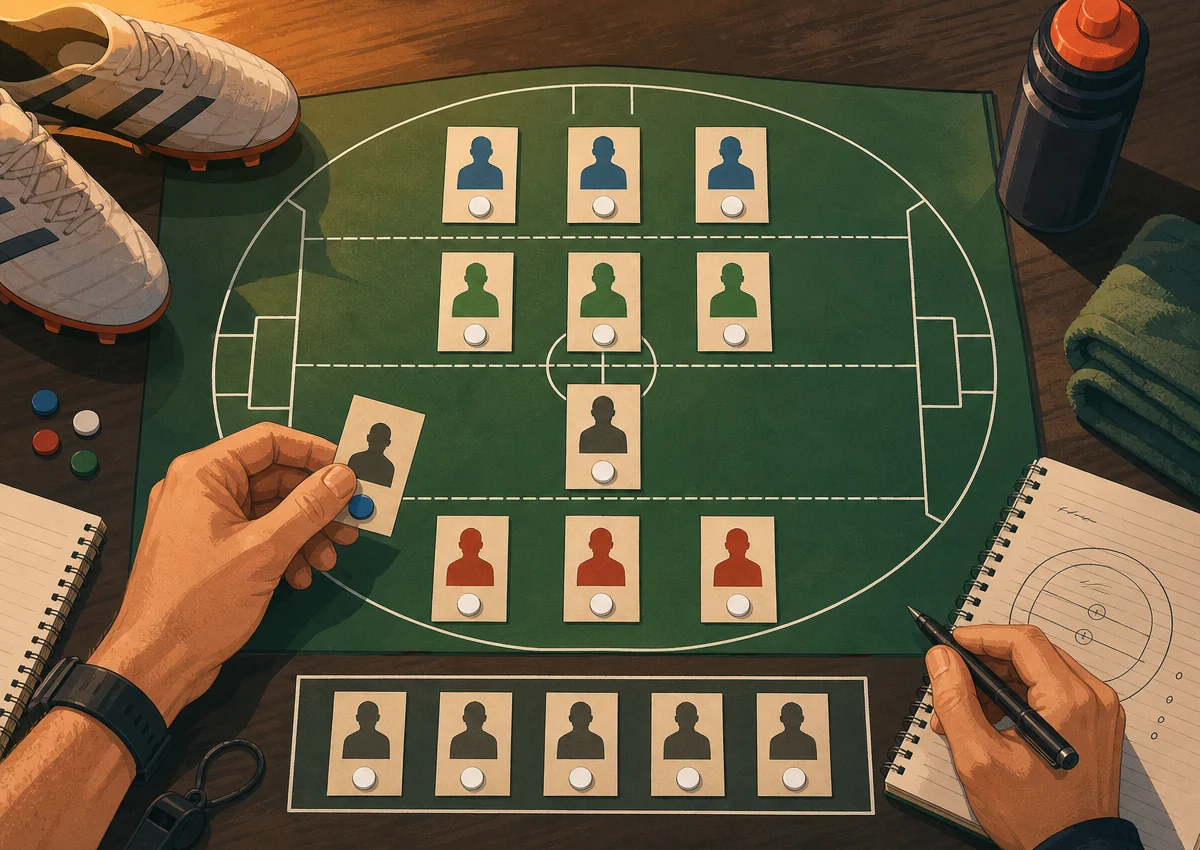
A sound AFL Fantasy Classic squad is easier to review when every position has a clear job. Consider the starting structure, bench balance and salary cap together so a decision in one line does not quietly weaken another.

Top-down squad-planning board with defender, midfielder, ruck and forward areas plus a separate bench row made from paper cards
01

Read the four position groups together

Compare defender durability, midfielder scoring volume, ruck role security and forward flexibility as separate decision points. The aim is to see which role is carrying the next roster problem.

02

Protect the starting ruck

A strong starting ruck paired with a flexible bench option is a useful illustrative way to think about salary allocation. It shows the trade-off between spending for a starting role and keeping cover that can support the structure.

03

Give the bench a job

Bench places should be considered alongside the starting structure, not after it. When a transfer changes the salary cap or positional mix, review whether the bench still supports the defenders, midfielders, rucks and forwards your plan depends on.

Charcoal and warm-paper desk showing a starting ruck card, flexible bench marker and salary allocation notes beside an oval diagram

Illustrative notes

Read the decision path

A useful AFL Fantasy guide makes the comparison visible: name the role, inspect the fixture and flag what is illustrative or needs checking. That keeps the trade-off clear before a coach chooses a move.

Warm evening tactical desk notebook split between a favourable fixture run and a tougher matchup sequence using abstract magnets

Illustrative fixture swing

Compare a player facing a favourable run with a similar-priced player carrying a tougher sequence of matchups. Treat the comparison as a way to inspect fixture context, not as current round advice. Any changing detail should be checked against a verified dated source before it shapes a move.

Let the source date shape the decision

A timeless comparison can explain how fixture context affects a choice. Dated information should be checked before it changes a squad decision, while an undated example should remain an explanation rather than current round advice.

Record the trade-off before choosing

Write down the roster constraint, role, fixture comparison and likely trade-off before choosing a move. Note what is known, what remains uncertain and whether the example is simply a guide to the decision.

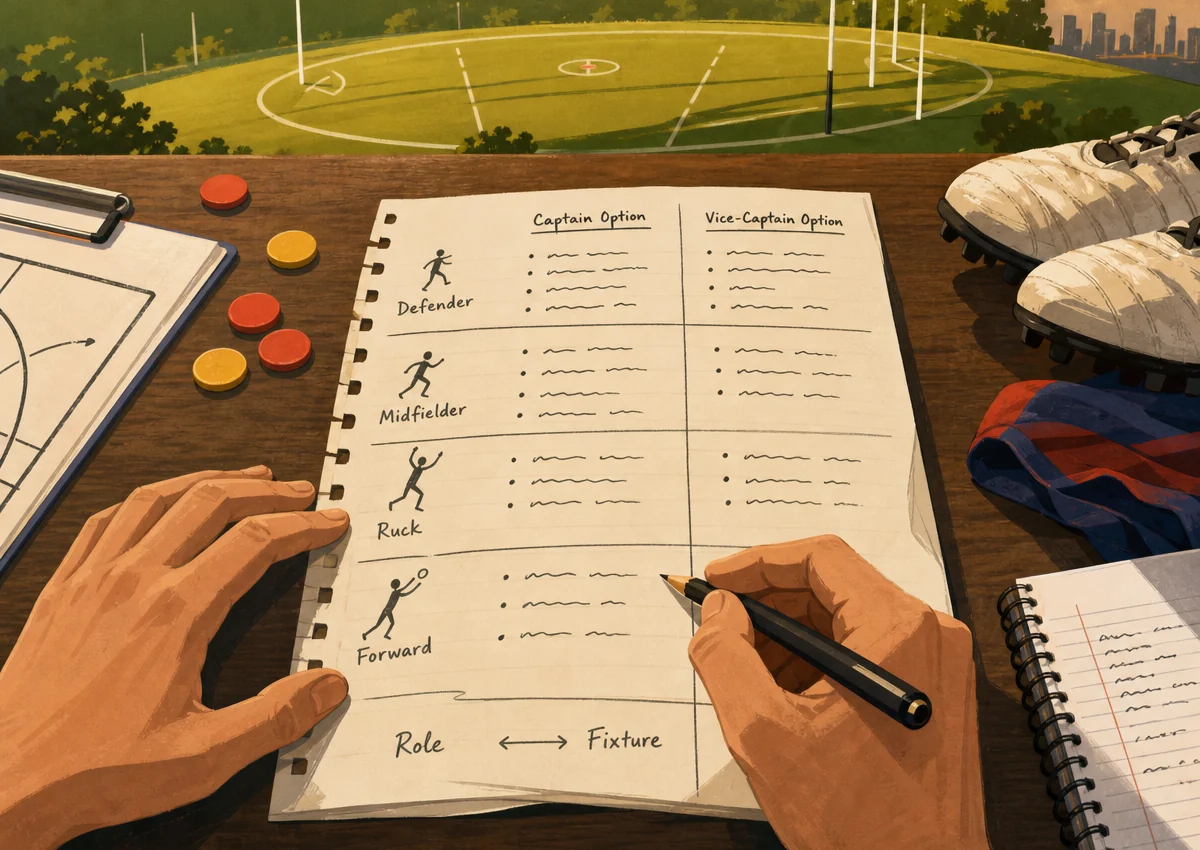
Handwritten comparison sheet with defender, midfielder, ruck and forward role notes and a small source-date mark

Bring the decision to the desk

Have a squad question?

Send the round, roster issue or comparison you are working through, and make the decision easier to inspect before you act.

Write to Ruck & Roster

Ruck & Roster
[email protected]
+61 7 3166 2477
295 Brunswick Street, Fortitude Valley, Queensland 4006

+61 7 3166 2477
[email protected]

Quiet editorial desk near warm evening light with a notebook, pencil and blank message card

Make the question specific

A useful enquiry can begin with the position, role, fixture or trade-off you want to compare.